
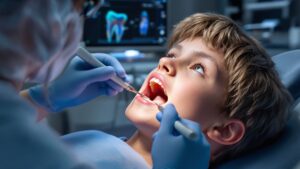
A knocked-out tooth is one of dentistry’s most urgent emergencies—and one where quick, informed action can mean the difference between saving and losing your natural tooth forever. At Dorion Dental Specialists, we want every Triangle-area resident to know exactly what to do in those critical first 60 minutes.
Every year, more than five million teeth are knocked out in children and adults across the United States. Whether it happens during a youth soccer game at Cary’s WakeMed Soccer Park, a basketball pickup game, a cycling accident along Chapel Hill’s greenways, or simply an unexpected fall, dental avulsion—the clinical term for a completely knocked-out tooth—demands immediate, knowledgeable action.
The good news? A knocked-out permanent tooth can often be saved. But the window for successful reimplantation is narrow, the steps matter enormously, and expert professional care within 60 minutes is essential.
Here’s everything you need to know.
We know this is easier said than done. A knocked-out tooth is frightening, often accompanied by bleeding, pain, and shock. But panic is your enemy right now. Clear thinking in the next few minutes can save the tooth.
Take one deep breath. Assess the situation. Then follow these steps precisely.
This sounds obvious, but in the chaos and adrenaline of the moment, people sometimes forget to locate the tooth. If it happened during a sports game or fall, the tooth may have landed several feet away. Look carefully.
If you cannot find the tooth within a minute or two, don’t delay treatment. Move forward with getting professional care. The time you spend searching shouldn’t push you past that critical 60-minute window.
How you handle the tooth in the next 30 seconds matters enormously for successful reimplantation.
Always hold the tooth by the crown. The crown is the white portion you normally see above the gum line. This is the only part you should touch.
Never touch the root. The root surface contains the periodontal ligament—microscopic fibers and cells that are absolutely essential for the tooth to reattach to the bone. These delicate cells can be damaged or destroyed simply by handling. Once damaged, reimplantation success drops significantly.
This single mistake of grabbing a knocked-out tooth by the root is one of the most common errors people make, and it dramatically reduces the chances of saving the tooth.
What this looks like in practice:
Before doing anything else, quickly look at the tooth:
Is it a permanent tooth or a baby tooth?
This distinction is critically important:
Is the tooth whole or broken?
If the tooth appears complete with intact root, proceed with reimplantation steps. If the tooth is fractured, save all pieces and bring them to your appointment—but reimplantation may not be possible.
Is the tooth visibly dirty?
If the tooth landed on a clean surface, don’t rinse it. If it’s visibly contaminated—dirt, debris, grass—a very gentle rinse is necessary before reinsertion.
If the tooth is dirty, rinse it gently with milk (ideal) or clean water for no more than 10 seconds.
Critical rules for rinsing:
The goal is simply removing gross contamination. Aggressive cleaning destroys the periodontal ligament cells you’re trying to protect.
Here is where many people hesitate, but reinserting the tooth into its socket immediately gives it the absolute best chance of survival.
Why reinsertion works:
The tooth’s periodontal ligament cells need the environment only your mouth can provide – moisture, temperature, and chemical signals that support cell survival. Every minute outside the socket further depletes these cells.
How to reinsert the tooth:
First, identify the correct orientation. The tooth has a natural shape – flat on one side, curved on the other. For front teeth specifically, the flat side faces toward your tongue.
Second, gently push the tooth back into the socket using firm but gentle pressure with your finger. The tooth should slip into position fairly naturally if properly aligned.
Third, hold it in place by biting gently on a clean folded cloth, gauze, or even a damp tea bag. Maintain gentle pressure to keep the tooth in its socket during transport.
When reinsertion isn’t advisable:
If reinsertion isn’t possible, immediately proceed to storage.
If reinsertion isn’t possible, for any reason, proper storage becomes critical. The goal is keeping those periodontal ligament cells alive until a dentist can reimplant the tooth professionally.
What Never to Use:
While preparing to transport, address immediate bleeding:
For bleeding at the socket:
For pain management:
Call us before you arrive. This is important for two reasons:
We can prepare for your arrival. When you call ahead, our team sets up immediately – we have everything ready the moment you walk through the door. Every second counts.
We can guide you in real time. If you have questions about tooth handling, storage, or what to expect, our team can walk you through it on the phone while you’re en-route.
Cary Office: 919-650-1101 Chapel Hill Office: 919-967-5099
When you call, tell us:
We prioritize dental avulsions as the time-sensitive emergencies they are.
Understanding what to expect can help you stay calm during an already stressful situation.
Immediate Assessment: Our periodontist will quickly evaluate the tooth, the socket, and surrounding structures. Advanced imaging, including digital X-rays and 3D CBCT imaging when necessary, allows us to assess the socket condition, root length, surrounding bone, and the best approach for reimplantation.
Professional Reimplantation: If you weren’t able to reinsert the tooth yourself, our specialist will reimplant it with precise technique, ensuring proper positioning, alignment, and depth.
Stabilization: The reimplanted tooth will be stabilized with a flexible splint, a thin wire or fiber attached to the surrounding teeth with composite resin. This holds the tooth in place while the periodontal ligament reattaches over the following 2-8 weeks, depending on the case.
Root Canal Evaluation: Within 7-10 days, most reimplanted permanent teeth will require root canal therapy. When a tooth is knocked out, the nerve (pulp) typically loses its blood supply and becomes non-vital. Root canal treatment removes the pulp, eliminating the risk of infection and allowing the tooth to be retained long-term. Our team will monitor this carefully and schedule treatment at the optimal time.
Antibiotic Prescription: Depending on the circumstances—especially if the tooth was contaminated or the patient has medical conditions—we may prescribe antibiotics to prevent infection.
Follow-Up Care: We’ll schedule follow-up appointments at regular intervals (typically 1 week, 4 weeks, 3 months, 6 months, and annually) to monitor healing, assess the splint, perform root canal therapy at the appropriate time, and evaluate long-term success.
Success in tooth reimplantation is never guaranteed, but the factors that most influence outcomes are well-documented:
Time is the most critical factor.
Storage medium matters. Teeth stored in Hank’s Balanced Salt Solution or milk show significantly better outcomes than teeth stored in water or allowed to dry.
Avoiding drying is essential. Even 15-30 minutes of drying time can severely compromise outcomes. A dry tooth has far lower reimplantation success than one that was kept moist, even if it arrived beyond the 60-minute window.
Patient age plays a role. Younger patients with developing bone and higher cellular activity tend to have better reimplantation outcomes. However, successful reimplantation occurs across all age groups.
Root development matters. Teeth with incompletely developed roots (common in children and teenagers) often have better long-term outcomes because of the potential for revascularization—the re-establishment of blood supply to the pulp.
If the Tooth Cannot Be Saved: Your Next Steps
Despite best efforts, not every knocked-out tooth can be successfully reimplanted. If reimplantation isn’t possible or ultimately fails, the tooth is lost, but your smile doesn’t have to be.
At Dorion Dental Specialists, we provide comprehensive tooth replacement solutions with the same level of expertise and care:
Dental Implants: The Gold StandardA dental implant – a titanium post placed in the jawbone – replicates the natural tooth root and supports a custom crown. Implants look, feel, and function like natural teeth and are designed to last a lifetime. For most patients who lose a tooth permanently, a dental implant is the ideal long-term solution.
Socket Preservation: When a tooth is lost, bone loss at the extraction site begins immediately. We often perform socket preservation – a bone grafting procedure – at the time of tooth loss to maintain bone volume for future implant placement.
Timeline for Implants After Tooth Loss: Implant placement typically occurs after sufficient healing, usually 3-6 months after tooth loss, sometimes with socket preservation performed simultaneously. Our periodontists plan this timeline carefully to optimize both healing and implant success.
Temporary Solutions: During the healing period, we can provide temporary tooth replacement options so you’re never without a tooth in visible areas.
The steps differ significantly depending on whether the tooth is primary (baby) or permanent:
Baby teeth (typically lost by age 12):
Permanent teeth in children:
Sports Prevention: Many knocked-out teeth are entirely preventable with a custom-fitted athletic mouthguard. Off-the-shelf mouthguards provide limited protection because they don’t fit securely. At Dorion Dental Specialists, we can fabricate custom mouthguards that:
If your child participates in any contact sport – football, basketball, soccer, lacrosse, hockey, wrestling, martial arts – a custom mouthguard is one of the best dental investments you can make.
Your Dental Emergency Preparedness Plan
Don’t wait for an emergency to figure out what to do. Prepare now:
Assemble a Dental Emergency Kit: Keep the following accessible—in your home medicine cabinet, your car’s glove compartment, and your child’s school sports bag:
Share This Information: Coaches, teachers, school nurses, and parents of children who play sports should all know what to do when a tooth is knocked out. Share this article with your child’s athletic program, coaching staff, and school nurse. This knowledge could save a child’s tooth.
When a tooth is knocked out, you need specialists, not a general dentist who sees emergencies occasionally.
Periodontal Expertise: Tooth reimplantation is a periodontal procedure. Our board-certified periodontists have specialized training in the tissues and structures involved – the periodontal ligament, alveolar bone, and supporting structures. This expertise matters for both the immediate reimplantation and long-term monitoring.
Advanced Diagnostic Technology: We use 3D CBCT imaging when necessary to precisely evaluate socket condition, bone levels, and surrounding structures before reimplantation. This guides optimal placement and helps predict long-term outcomes.
Three Specialists: With three board-certified periodontists on staff, we have the capacity to see emergency patients promptly. We don’t make you wait days for an appointment when minutes matter.
Complete Care Continuity: From emergency reimplantation through splinting, root canal evaluation, long-term monitoring, and potential implant placement if needed – everything happens at Dorion Dental Specialists. No fragmented care across multiple providers.
Integrated Prosthodontic Capabilities: If the tooth ultimately cannot be saved and an implant is needed, our prosthodontic expertise ensures seamless transition from tooth loss to implant restoration with the aesthetic and functional outcome carefully planned from the beginning.
Two Convenient Triangle Locations: Whether you’re closer to Cary or Chapel Hill, our locations provide quick access from throughout the Triangle. When you’re racing against a 60-minute clock, proximity matters.
The Bottom Line: Know Before It Happens
A knocked-out tooth is terrifying in the moment. But patients who know what to do—who stay calm, handle the tooth correctly, keep it moist, and get to us within 60 minutes—give that tooth its best possible chance.
And patients who don’t know what to do? They often make well-intentioned mistakes that make saving the tooth impossible: drying the tooth, handling the root, waiting too long, or using the wrong storage medium.
Knowledge saves teeth. Preparation saves smiles.
Bookmark this page. Screenshot the steps. Save our numbers. Share this information with parents, coaches, and teachers in your community.
Because when it happens – and statistics suggest it likely will happen to someone you know – those who knew what to do will wish everyone did too.
SAVE THIS:
✅ STAY CALM. EVERY SECOND COUNTS.
✅ FIND THE TOOTH. Handle crown only—NEVER the root.
✅ BABY TOOTH? Don’t reinsert. Call us immediately.
✅ PERMANENT TOOTH? Rinse gently if dirty (milk/water, 10 sec max).
✅ REINSERT immediately if possible. Bite gently on gauze.
✅ CAN’T REINSERT? Store in MILK. Or under tongue/in cheek.
✅ CALL DORION & ASSOCIATES NOW:
✅ ARRIVE WITHIN 60 MINUTES.
✅ BRING THE TOOTH no matter what, even if dried.
Don’t wait. Don’t hope. Don’t search. Call us immediately—because saving your natural tooth starts with knowing exactly what to do.